

Federal grant audits expose the cracks in manual accounting processes. As of August 2026, organizations facing federal audits must navigate updated reporting frameworks that punish fragmented record-keeping. The era of tracking multi-year, multi-million-dollar funding pools in disconnected spreadsheets is over.
TL;DR: The 2025-2026 Uniform Guidance shift to a $1M threshold requires organizations to abandon manual spreadsheets in favor of automated grant management systems (like FundRobin) to ensure continuous compliance, robust audit trails, and stress-free audit readiness.
Nonprofit CFOs, controllers, and grant managers face unprecedented pressure to maintain clear audit trails. Transitioning from reactive, year-end scrambles to automated operational compliance requires specific software-driven workflows. This guide provides the remediation roadmap for modern regulatory compliance.
Navigating the 2025 Uniform Guidance Updates and the $1M Single Audit Threshold
Mastering Grant Audits: The 2025 $1M Threshold Guide
Recent federal updates mandate tighter internal controls while shifting reporting requirements. Understanding these changes ensures your organization avoids costly audit findings.
Understanding the $1M Threshold vs. Legacy Compliance
The Office of Management and Budget (OMB) raised the Single Audit threshold from $750,000 to $1,000,000 for fiscal years beginning on or after October 1, 2024. This change creates a dual-standard dilemma for many organizations. You must manage older federal awards under previous regulations while applying the new threshold rules to current funding.
Of 225 active FundRobin organisation profiles with annual-budget data, 152 — 68% — were classified in the ‘Under $1M’ annual-budget band. These organizations frequently hover on the threshold line. Tracking these separate pools of funding requires a unified digital ledger to prevent co-mingling funds or applying the wrong compliance standard.
How the 2025 OMB Compliance Supplement Shifts Internal Controls
Auditors no longer accept static policy documents as proof of compliance. According to BNN CPA’s analysis of the 2025 OMB Compliance Supplement: Key Changes, auditors now test the active enforcement of internal controls. They require system-generated proof that approvals occurred before expenditures were released. If your purchasing policy requires two signatures, the auditor expects a digital timestamp showing both users authenticated and approved the exact transaction.
Moving from Panic-Mode Preparedness to Continuous Compliance

Treating audit readiness as an annual event guarantees a stressful audit season. Continuous compliance builds evidence generation into daily operations. When grant managers upload receipts, tag expenditures to Grant-IDs, and route approvals through a central system, the audit trail builds itself automatically.
Architecting Evidence: Moving to Real-Time Audit Trails
Sustainable grant management demands an evidence architecture that auditors inherently trust. You must replace manual tracking with strict, software-enforced guardrails.
Why Manual Spreadsheets Fail the Modern Audit Test
Manual spreadsheets present immediate vulnerabilities during a Single Audit. They lack version control, offer no user attribution for changes, and suffer from broken formulas. An auditor viewing an Excel file cannot determine who altered an expenditure amount or when that change occurred. Manual data entry leads directly to non-compliance through transcription errors and missed reporting deadlines.
Establishing Pre-Coded Grant-ID Systems and Workflows
Pre-coded Grant-ID workflows automatically tie every organizational expenditure to a specific funding source. Implementing this requires a focus on modernizing fund accounting practices, such as:
- Creating a unique alphanumeric code for every federal award.
- Restricting general ledger access so users can only log expenses against active, valid Grant-IDs.
- Automating budget-vs-actual alerts that trigger when a specific Grant-ID approaches 90% utilization.
This system prevents staff from charging unallowable costs to restrictive grants.
AI-Driven Compliance at the Proposal Stage
Compliance begins before you secure the award. Submitting a proposal that misaligns with federal guidelines sets the stage for downstream audit failures and common grant application mistakes. FundRobin’s Smart Proposal Generation analyzes grant guidelines and mandatory sections to draft compliant proposals. Built-in checks verify local regulations and funder requirements automatically. This ensures your project starts with an accurate, compliant budget and timeline.
The Remediation Roadmap: Converting Audit Findings into Automated Controls
Past audit findings provide a blueprint for required system upgrades. You can resolve recurring issues by turning static policies into active system rules.
Closing the Loop on Subrecipient Transparency and Monitoring
Poor subrecipient monitoring consistently triggers audit findings. Relying on emails to collect subrecipient audit reports guarantees missing documentation. Research from Origami Risk on From Audit Findings to Action: Best Practices for Issues Management shows that structured software workflows resolve compliance gaps permanently. Automated systems send scheduled document requests to subrecipients, log receipt timestamps, and lock fund disbursements until the subrecipient uploads their required risk assessment.
Software-Driven Compensating Controls for Smaller Nonprofits
Small accounting teams often lack the staff required for traditional segregation of duties. You can use software-driven compensating controls to satisfy auditors. According to GatekeeperHQ’s report on What is Nonprofit Compliance? A 2026 Compliance Guide, automated multi-tier approvals and read-only system access logs provide valid alternatives. A single controller can process payments if the software automatically alerts a board member to review transactions over $5,000.
Tracking Performance via Centralized Dashboards
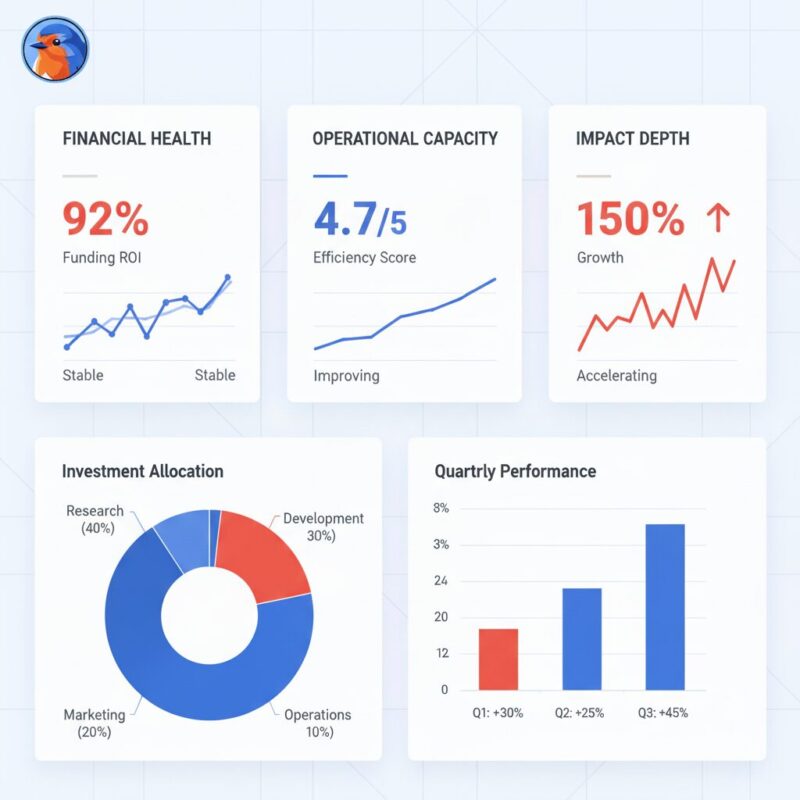
Centralized dashboards provide a single source of truth for reporting. FundRobin’s Smart Dashboard offers role-based views for executives and grant managers. You can track application status, monitor subrecipient compliance benchmarks, and generate real-time expenditure reports without spending 200 hours manually consolidating data.
Securing the Grant Lifecycle: Modern Cybersecurity & AI Compliance
Auditors now evaluate digital security as a core component of your internal controls. Protecting federal funds requires modern cloud infrastructure and safe AI implementation.
Cybersecurity & ACH Fraud: New Frontiers in Audit Scrutiny
Business email compromise and ACH fraud cost organizations billions annually. The Association for Financial Professionals reports that ACH payments are a primary target for fraudsters. Auditors now aggressively test systems for vendor-change verification protocols. Modern grant systems require multi-factor authentication (MFA) and automated vendor verification workflows to prevent unauthorized bank routing changes.
Data Privacy and Multi-Region Compliance Strategies
Managing grants globally introduces strict data privacy requirements like GDPR or Charity Commission guidelines. Your compliance system must enforce data minimization and secure encryption. FundRobin utilizes secure, UK-based infrastructure with AES-256 encryption. FundRobin never uses user data for open model training, ensuring your sensitive beneficiary and financial information remains strictly confidential.
Leveraging Grounded AI for Regulatory Research

Using open, hallucination-prone AI tools for federal compliance research creates massive legal liability. The Robin AI Assistant operates as a “grounded” AI tool. It relies strictly on successful applications and official funding guidelines rather than open web scraping. This allows grant managers to instantly research UK and international funding guidelines, validate proposal requirements, and verify allowability without the risk of AI hallucination. Stress-test your grant proposals using secure AI frameworks to guarantee total compliance before submission.
Frequently Asked Questions
What is the new Single Audit threshold for 2025?
The new Single Audit threshold is $1,000,000 in federal expenditures per fiscal year, up from $750,000, based on the 2025 OMB Compliance Supplement. Organizations must manage a dual-standard dilemma, applying older thresholds to legacy awards while using the $1M standard for new funding, which requires precise ledger tracking.
How can nonprofits automate grant management and compliance?
Nonprofits automate grant management by replacing manual spreadsheets with centralized software that uses pre-coded Grant-IDs to lock expenditures to specific funding sources. Implementing systems with AI-driven proposal generation ensures compliance starts before the award, while automated workflows generate real-time audit trails for reviewers.
What are compensating controls for small nonprofit grant audits?
Compensating controls are software-driven guardrails used when an organization lacks enough staff for full segregation of duties. Small teams can satisfy auditors by using automated system access logs, AI review tools, and digital multi-tier approvals that alert executives to high-value transactions automatically.
How does cybersecurity impact grant management audits?
Cybersecurity directly impacts audits because reviewers now test internal controls against ACH fraud and data privacy breaches. Modern internal control audits require organizations to abandon local file storage in favor of secure cloud infrastructure with multi-factor authentication, vendor-change verification, and GDPR-compliant encryption.
Can AI help with federal grant compliance and reporting?
Yes, grounded AI assistants like Robin AI can instantly research compliance guidelines and validate proposal requirements without hallucinating false regulations. By restricting the AI’s knowledge base to official guidelines and organizational evidence, AI reduces reporting hours while maintaining strict regulatory accuracy.
Key Takeaways:
- Implement a robust dual-standard compliance strategy to manage legacy awards alongside the new $1M Single Audit threshold mandated by the 2025 OMB Uniform Guidance.
- Transition from reactive documentation to continuous compliance software to save hundreds of hours during the annual “audit season” scramble.
- Utilize AI-powered grant management platforms to ensure proposals are structurally compliant from day one, reducing downstream audit findings.
- Deploy software-driven compensating controls—like automated alerts and strict system access logs—to satisfy auditors when operating with a small accounting team.
Conclusion: Future-Proofing Your Grant Management Lifecycle
Adapting to the 2025 Uniform Guidance and the new $1M Single Audit threshold requires a fundamental shift in operational strategy. Relying on legacy spreadsheets and manual document collection guarantees non-compliance under modern audit scrutiny.
Automated, AI-driven platforms save hundreds of administrative hours while generating the exact digital evidence auditors demand. By architecting your evidence through a secure, centralized system, you turn audit readiness into an effortless byproduct of daily work. Upgrade your grant infrastructure today by reviewing your options to Compare plans or begin a guided Showcase Trial to experience automated grant compliance firsthand.
