
During my years coordinating emergency responses with UNICEF and WFP, I watched brilliant teams lose thousands of pounds in potential revenue simply because they lacked the administrative capacity to follow up on matching gifts. When you are managing a crisis, chasing an employer match spreadsheet feels impossible. Yet, the failure to operationalise these funds leaves highly scalable revenue on the table.
Today, charities face immense economic pressure. They cannot afford to treat matching gifts as a serendipitous bonus. These funds require a systemic, automated framework that operates quietly in the background, securing revenue without burning out your staff or your donors.
TL;DR: Moving from manual tracking to systemic matching gift automation eliminates administrative bottlenecks for micro-nonprofits. With donor fatigue rising in early 2026, charities must bridge individual employer matches with broader grant workflows using impact-first messaging to scale predictable revenue without increasing donor burden.
The Evolution of Matching Gifts: From Transactional to Systemic
Scaling Charity Revenue via Automated Matching Gifts
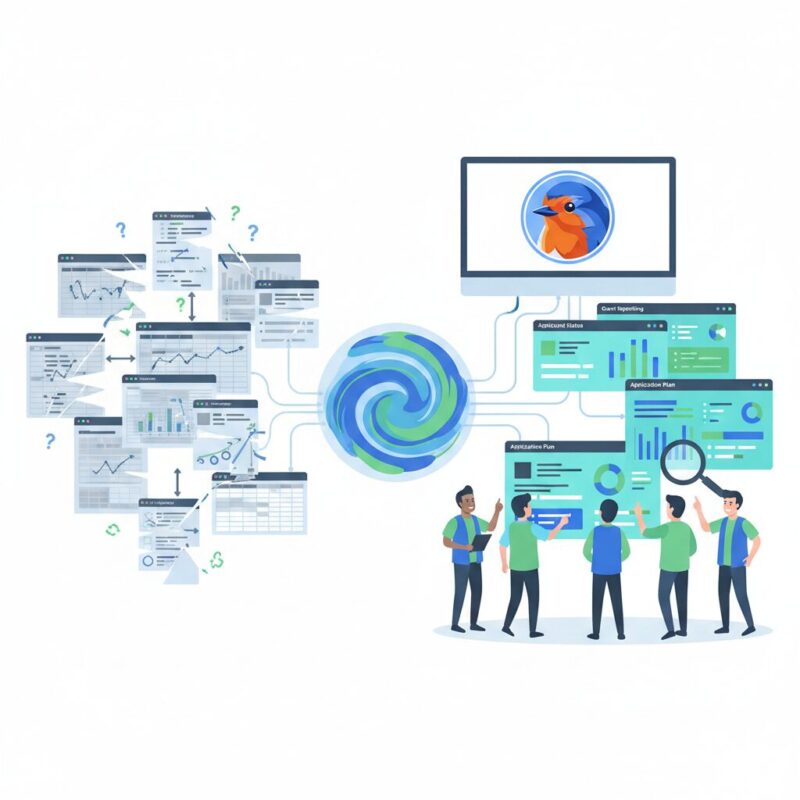
The traditional approach to matching gifts is highly transactional. A donor gives, the charity sporadically remembers to ask about an employer match, and a staff member manually updates a spreadsheet if the funds eventually arrive. This ad-hoc mindset fails entirely in modern revenue operations.
A systemic framework integrates corporate matching gift programs directly into the organisation’s daily workflow. It treats the initial individual donation as the first step in a broader corporate partnership strategy, rather than the final transaction.
The Hidden Costs of Ad-Hoc Matching Gift Processing
Manual tracking drains resources and directly hurts your return on investment. Teams waste countless hours hunting through disconnected CRM systems and updating spreadsheets instead of building relationships.
According to Double the Donation’s 2026 matching gift statistics, billions in matching gift revenue go unclaimed every year primarily because donors do not know their employers offer these programmes, and charities lack the automated follow-up systems to remind them. For an Executive Director managing a tight budget, missed follow-ups translate directly to lost mission impact.
Shifting Mindsets: Matching Gifts as Donor Retention Tools
We must stop viewing matching gifts solely as free money and start treating them as strategic donor retention tools. When a charity successfully helps a donor double their contribution through an employer match, it validates the donor’s initial choice to give.
Automated, positive reinforcement during the match process proves to the donor that their contribution is being maximised. This shared success deepens the relationship and increases the likelihood of future giving. The psychological shift from a passive receipt to an active partnership changes the entire retention trajectory.
2026 Market Realities: Why Automation is Now Mandatory for Growth
In September 2026, automation is no longer a luxury for enterprise charities. It is a baseline requirement for survival. Organisations that fail to automate are actively falling behind competitors who use technology to scale their revenue operations.
FundRobin’s August 2026 analysis of 225 active organisation profiles found that 53% operate with fewer than ten staff members. These micro-nonprofits cannot solve operational problems by hiring more administrators. They must adopt technology. A systemic approach to matching gifts allows a three-person team to execute the follow-up cadence of a thirty-person development department.
Combatting Donor Fatigue with Value-Based Matching Communications
Donors receive a constant barrage of charitable requests. If your matching gift outreach feels like just another demand for money, donors will ignore it. Value-based communication is the antidote to this fatigue, positioning the charity as a helpful guide rather than a relentless solicitor.
Understanding the “Request Overload” Phenomenon in Charity Fundraising
Request overload happens when the sheer volume of digital fundraising appeals forces donors to emotionally detach. A well-intentioned matching gift reminder easily crosses the threshold from a helpful nudge to a frustrating demand if the timing is poor.
Zeffy’s 2026 research on donor fatigue confirms that constant transactional asks severely damage long-term donor relationships. We have to differentiate between general donor burnout, which stems from over-solicitation, and specific matching gift fatigue, which occurs when instructions are too complex or repetitive.
Impact-First Messaging: Pivoting from “Give More” to “Amplify Success”
To prevent request overload, change the framing. Impact-first messaging reframes the matching gift request as an opportunity for the donor to double their impact without opening their wallet again.
Instead of writing, “Please submit your matching gift form so we can hit our goal,” use an impact-centric approach. Say, “Your £50 gift just funded two crisis kits. Because you work at Microsoft, you can amplify that success and fund two more kits today at zero cost to you.” This language reminds donors of the power they hold, turning a bureaucratic task into an empowering act of philanthropy.
Cadence-Based Follow-Ups: Structuring Sustainable Touchpoints
The most effective way to secure corporate matches without annoying donors is implementing a strict, automated communication cadence. Relying on human memory to send follow-ups guarantees inconsistency.
An optimal automated follow-up sequence begins with an immediate, impact-focused donation receipt that includes a matching gift search link. If the match is not initiated, the system triggers a targeted check-in at the 48-hour mark when the donor’s emotional connection to the cause is still highest. A final, gentle reminder goes out at 14 days, often packaged as a broader impact report rather than a direct ask. This cadence automation ensures persistent engagement while firmly respecting the donor’s boundaries.
Strategic Segmentation and Data-Driven Employer Matching
You do not need to blanket your entire email list with matching gift appeals. Modern revenue operations rely on working smarter by using existing donor data to predict and segment outreach.
Profiling Your Base for Maximum Matching Potential
Start by analysing your existing donor database to identify high-probability candidates. The simplest method is filtering your CRM for corporate email domains. If fifty recurring donors use @deloitte.com or @cisco.com addresses, you instantly have a highly targeted segment of individuals who work for known matching-gift employers.
Grouping these individuals allows you to send highly specific instructions tailored to their exact corporate portals, drastically reducing the friction required to complete the match.
Integrating Search Widgets Without Disrupting Donor Experience
Capturing employer information at the point of donation is critical, but friction kills conversions. The placement of matching gift search widgets requires careful user experience design.
The optimal placement for an employer search widget is often the post-donation confirmation page. The donor has already completed the primary transaction, removing any risk of cart abandonment. The widget loads quickly, asks a simple question about their employer, and provides immediate links to the relevant corporate giving forms.
Leveraging CRM Data to Predict and Personalize Outreach
Automating your matching gift process requires a CRM that talks to your outreach tools. By setting up custom fields for employer data, you can trigger specific email templates automatically.
According to DonorPerfect’s analysis of matching strategies, integrating employer data directly into your donor profiles allows major gift officers to receive automated alerts when high-value match opportunities appear. This ensures personal outreach happens exactly when it matters most, without requiring staff to manually scan daily transaction logs.
Maximizing ROI for Micro-Nonprofits via Low-Friction Automation
Executive Directors of charities under £5M face a distinct reality: they lack dedicated IT departments. Complex API builds and enterprise software implementations are non-starters. Micro-nonprofits need low-friction tactics that deliver high ROI with minimal setup.
Building Workflows When You Lack Enterprise IT Teams
Select automation platforms that integrate easily out-of-the-box. You do not need custom coding to build an effective matching gift sequence. Rely on pre-built templates provided by specialized matching gift platforms that connect natively to your donation processor.
A recurring pattern in FundRobin’s customer research is workflow fragmentation. Grant information lives across spreadsheets, inboxes, and individual staff knowledge. Adopting a unified platform that centralises these processes prevents small teams from drowning in disconnected software.
Bridging the Gap Between Legacy Systems and Modern Tools
Many charities are locked into older, non-standard CRM systems. A full data migration is expensive and terrifying. However, you do not have to abandon your legacy system to implement modern matching gift automation.
Lightweight middleware tools (like Zapier or Make) and modern API integrations can bridge the gap, pushing transaction data from your donation page directly to your automated email sequences while simultaneously logging the activity back into your legacy database.
Scaling Beyond Individuals: Finding Associated Corporate Grants
A cluster of individual employee matches is a strong signal of corporate alignment. Once you identify that multiple employees from a specific company are donating to your cause, you can pivot your strategy from individual matches to institutional giving.
Use a comprehensive grant database to research the employer’s larger corporate foundation programs. The data you gathered from individual matching gifts becomes the perfect opening hook when you approach the corporate foundation for a major grant.
Connecting Individual Matching Gifts to Larger Corporate Philanthropy
To build systemic growth, charities must view matching gifts and institutional grants as a single, connected revenue pipeline. Managing this complexity requires tools that organise knowledge intelligently.
Centralising Knowledge: How the Organisation Library Fuels Growth

FundRobin customer research repeatedly shows that organisations already possess useful proposal language and project evidence, but struggle to find and safely reuse the right material. This is where centralising knowledge becomes essential.
The Organisation Library is the human workspace for reusable organisation knowledge. By storing your mission outcomes, past corporate interaction data, and matched funding history in one central hub, you break down the silos between the individual giving team and the grant writing team. You can easily access this unified context through a single dashboard, ensuring your next proposal builds on your past successes.
Using Robin to Draft Context-Rich Donor and Corporate Communications
With your facts secured in the Organisation Brain, you can safely accelerate your outreach. Robin is a contextual grant assistant that works with authorised opportunity and organisation context to draft highly tailored corporate grant applications.
Crucially, Robin uses current Organisation Brain truth. It grounds its drafts in your actual evidence, leaving clear gaps for human input rather than inventing plausible-sounding details. You maintain full human review and control over every final submission, ensuring your corporate appeals are both rapidly produced and rigorously accurate.
Unifying Your Revenue Pipeline: From Individual Matches to Institutional Grants
The journey from securing an automated £100 employer match to winning a £100,000 corporate foundation grant requires a unified perspective. By treating these systems as interconnected, regulated impact economy charities in 2026 build resilient, predictable revenue models that scale naturally without exhausting their human capital.
Frequently Asked Questions
How do charities identify the best corporate matching gifts and associated grants?
Charities identify the best corporate matching gifts by utilizing employer search widgets during the initial donation flow and cross-referencing those employer names with comprehensive grant databases. Once you know where your donors work, you can systematically filter opportunities and use tools like a USA grant finder to identify if those same corporations offer larger foundation grants that align with your mission.
What is the most effective messaging cadence for corporate matching gifts?
The most effective messaging cadence starts with an immediate impact-first receipt, followed by a targeted follow-up within 48 to 72 hours, and concludes with a final reminder at 14 days. This specific timeline maximizes match conversions while preventing request overload, as it engages donors when their connection to the cause is fresh without harassing them months later.
How can micro-nonprofits implement matching gift automation with limited staff?
Micro-nonprofits can implement matching gift automation by utilizing out-of-the-box CRM integrations and pre-built automated email cadences rather than attempting custom API development. According to the Nonprofit Leadership Alliance’s guidance on matching gifts, focusing on low-friction widgets that plug directly into existing donation pages allows small teams to scale revenue without hiring dedicated IT staff.
How do automated matching gifts interact with larger higher education fundraising?
Automated alumni matching gifts frequently serve as a pipeline indicator for major corporate partnerships and institutional giving in higher education fundraising. Because universities operate at a massive scale, tracking which corporations consistently match alumni gifts provides the development office with data-backed targets for six-figure corporate sponsorship requests.
Where can I find more resources on scaling my nonprofit’s grant and match revenue?
Platforms like FundRobin offer extensive grant guides and resources designed to help charities connect individual giving strategies with larger institutional funding operations. These resources provide practical frameworks for automating workflows, managing donor data, and executing complex grant proposals efficiently.
Key Takeaways:
- Implement systemic matching gift automation to drastically reduce administrative burden, allowing micro-nonprofits to turn transactional donations into predictable revenue streams.
- Prevent ‘request overload’ by utilizing impact-first messaging that frames the matching gift as an opportunity for donors to amplify their existing impact at no extra cost.
- Embed matching gift search widgets into the post-donation confirmation page to capture intent at the highest point of engagement without adding friction to the checkout process.
- Bridge the gap between individual employer matches and larger corporate grants by using an Organisation Library to centralise reusable mission knowledge for future proposals.
