
TL;DR: West Midlands nonprofits can strategically navigate the Heart of England Community Foundation and Birmingham hubs by mapping local philanthropic ecosystems rather than relying on generic directories. Adopting reusable core-cost narrative blocks and understanding strict geographic eligibility rules dramatically reduces grant-writing fatigue while unlocking hidden regional funds.
Introduction: The New Realities of Grant Seeking in the West Midlands
Nonprofit teams across Birmingham and Solihull face an administrative breaking point in October 2026. The pressure to maintain service delivery while chasing increasingly fragmented funding streams has left operational staff exhausted. According to the Urban Institute, the share of nonprofit leaders reporting staff burnout as their top concern doubled from 2024 to 2025. This exhaustion stems from a systemic problem: organizations spend too much time navigating generic search results and highly complex application portals.
Overcoming Grant-Fatigue in 2026 and Beyond
Burnout stems from chronic underpay and heavy workloads, leaving organizations struggling to retain talent, as noted in recent Independent Sector research. When fundraisers rely on a spray-and-pray approach, the administrative toll compounds rapidly. Digital grant management systems have modernized philanthropy, but they often front-load the burden onto the applicant. Moving from exhaustion to efficiency requires changing how a charity targets its applications.
Why Generic Search Fails Midlands Charities
National aggregator sites dump thousands of irrelevant opportunities onto overwhelmed teams. A generic search for community funding returns broad national schemes or irrelevant geographic pots. This noise obscures the hyper-local trusts that actually fund Birmingham operations. Relying on basic web searches means missing unpublicized local opportunities and wasting hours on applications destined for immediate rejection.
The Role of a Funding Intelligence Map
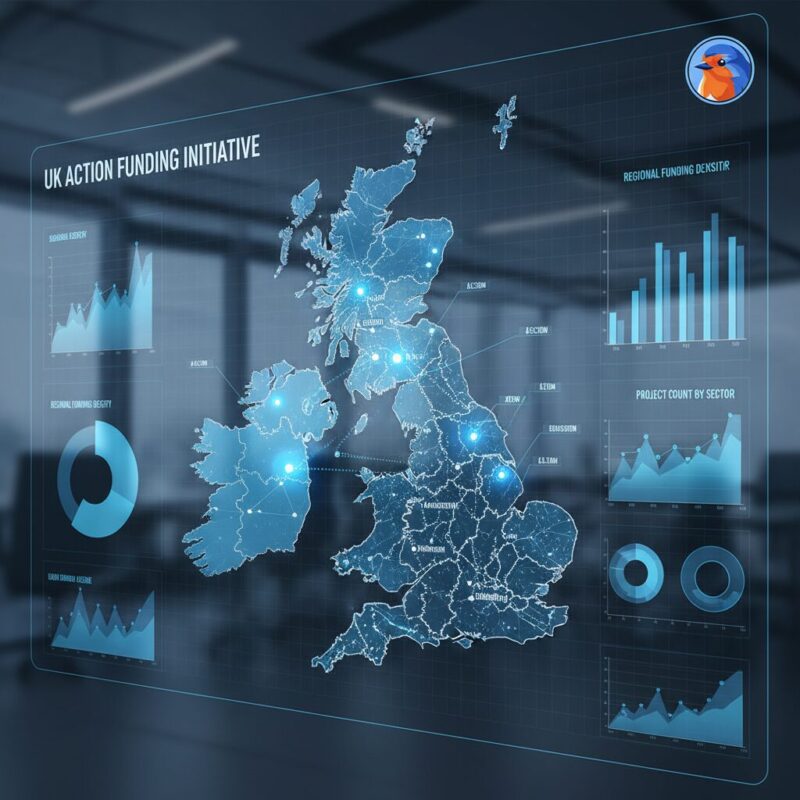
A strategic approach requires a funding intelligence map. This framework categorizes the local philanthropic ecosystem based on mission maturity and strict geographic boundaries. Instead of viewing every open grant as a target, charities evaluate opportunities against their own operational realities. This localized evaluation mirrors successful UK Grant Funding Community Foundation Partnerships seen across the country, turning random searching into targeted acquisition.
Mastering the Heart of England Community Foundation (HoECF) Transition
The Heart of England Community Foundation distributes major funding across the region. However, foundation coverage and programme windows differ significantly. There is no blanket eligibility for the entire Midlands.
Understanding the Post-2026 HoECF Grant System Migration
The foundation recently modernized its infrastructure. The Heart of England Community Foundation paused funds through August 2026 for a system migration, relaunching the week of September 7, 2026, according to scvo.info. This pause created a backlog of demand. Charities applying in the final quarter of 2026 must prepare documentation carefully in advance to navigate the new portal efficiently.
Evaluating ‘Return on Effort’ for HoECF Applications
Pursuing small pots of money with massive reporting requirements accelerates burnout. A charity must calculate the core staff time required against the actual grant size. Chasing a £1,000 grant that demands £2,000 worth of administrative time harms the organization. Strategic effort evaluation prevents resource drain, a principle that drives effective MK Community Foundation Grants Strategy and applies directly to West Midlands hubs.
Decoding HoECF Geography: Warwickshire vs. Birmingham Eligibility
Geographic boundaries trigger instant rejections for unaware applicants. The HoECF manages distinct pots for specific postcodes. Foundation coverage differs widely, with the Birmingham and Black Country Communities Fund capping at £3,000, while Edgbaston & Northfield projects can reach £10,000, based on current Heart of England Community Foundation guidelines. Charities must verify their postal code against the specific scheme area before writing a single word.
Mapping Birmingham’s Hidden Philanthropic Ecosystems
Relying exclusively on the largest regional foundations creates organizational fragility. Local trusts and private sector initiatives offer less competitive funding streams for lean teams.
Looking Beyond Local Authority Portals
Birmingham City Council provides high-trust resources, but the application processes remain highly bureaucratic. Charities should engage networks rather than just direct cash portals. For example, BVSC operates The Community Development Practice Hub to connect and upskill practitioners in Birmingham. These networks frequently reveal consortium-building opportunities and unpublicized local funds that never appear on national databases.
Private Sector CSR and Local Trust Opportunities in Solihull
Corporate social responsibility programs present an untapped market. Medium-to-large businesses across Solihull and Birmingham allocate community investment budgets separate from traditional philanthropy. These applications often require a different narrative approach, focusing more on community visibility and marketing returns than traditional trust applications.
Blending Local Intelligence with Broad Aggregators
Large data sets like 360Giving require strict geographical and thematic parameters to be useful. Fundraisers can analyze these databases to see which local trusts currently fund similar organizations in the West Midlands. Data provides the raw material, but local intelligence interprets which trusts are actively looking for new partners.
Structuring Your Organisation for UK Grant Eligibility
Generic internet advice frequently confuses new charity founders regarding legal structures. Legal status dictates exactly which funding pots an organization can access across the Midlands.
Debunking US AI Funding Myths: Why LLCs Don’t Apply in the UK
Many founders rely on generic AI tools like ChatGPT for early grant advice, which regularly hallucinate US-centric structures. An LLC is a United States legal entity and has no relevance to UK charitable funding. Submitting applications or structuring a local project based on 501(c)(3) or LLC advice will immediately disqualify the applicant from Birmingham funding hubs.
The Power of CICs and Registered Charity Structures
UK funders require recognizable, regulated structures. Community Interest Companies and Registered Charities are the standard vehicles for grant eligibility. While some small grassroots pots fund un-constituted community groups, holding a recognized CIC or Charity number unlocks the vast majority of institutional funding across the West Midlands.
Applying the ‘Rule of 3’ to Midlands Nonprofits
Resilient charities avoid relying on a single local council contract. The Rule of 3 dictates that an organization should balance its income across statutory sources, trust funding, and community or corporate income. No single source should account for more than a third of the budget. Birmingham’s diverse hidden ecosystem allows charities to successfully execute this diversification.
The ‘Grant-Readiness’ Strategy for Core Costs
Core costs remain the hardest expenses to fund, yet they keep the lights on. Building a grant-ready repository of reusable narrative elements is the most effective defense against administrative fatigue.
Combating Workforce Challenges with Modular Narrative Blocks
Starting from a blank page for every HoECF application wastes critical staff time. Fundraisers must break down their mission, history, and core impact data into modular blocks. Standardizing statements for organizational need and community impact allows a lean team to assemble proposals rapidly without compromising quality.
Leveraging FundRobin’s Organisation Brain for Reusable Assets
FundRobin replaces the chaos of scattered documents with an Organisation Brain. This central workspace turns reviewed information into reusable factual context for future applications. By storing modular narrative blocks in the Organisation Library, charities maintain exact source and currentness context, ensuring they never accidentally submit outdated metrics to a funder.
Transforming Core Cost Data into Compelling Bids Using Grounded AI
Grounded AI accelerates the initial drafting phase by working directly from relevant organisation knowledge, not generic web data. FundRobin’s Smart Proposal creates AI-assisted first drafts for core costs while maintaining strict source provenance. This provenance shows the human fundraiser exactly which evidence informed the draft, turning a tedious writing task into a faster editing exercise.

Avoiding Common Pitfalls in Regional Hub Applications
Even the most compelling community projects fail when applicants ignore fundamental regional rules. Avoiding these errors keeps the return on effort high.
Misinterpreting Geographic Scope and Area Restrictions
Being registered in Birmingham does not guarantee eligibility for a fund targeting service delivery in a specific Coventry postcode. Funders reject applications that cross strict boundary lines. Similar geographic strictness applies nationwide, as detailed in the Charity Funding Scotland William Grant Foundation Guide, requiring applicants to read the fine print regarding area restrictions.
Relying on Outdated Source Material vs. Provenance
Copying a successful grant narrative from three years ago often introduces outdated local statistics into a new application. Assessors immediately notice stale data. Maintaining source provenance within a dedicated grant library prevents this error, ensuring every claim reflects the current reality of the West Midlands.
Failing to Keep a Human-in-the-Loop for Final Submissions
AI tools dramatically reduce the time spent in the drafting stage, but they are not submission engines. Under FundRobin’s operational design, users remain responsible for reviewing and editing drafts and making final submission decisions. The human-in-the-loop workflow provides the necessary quality control and contextual empathy that secures the funding.
Frequently Asked Questions
What grants are available from Birmingham Council?
Birmingham City Council explicitly distributes specific pots like Business & Community Funding, though many community grants are administered through independent trusts rather than the council itself. According to local portals, statutory funds often target cost-of-living relief, community recovery, and neighborhood improvements. Organizations must navigate bureaucratic council sites to find exact deadlines, making it vital to separate direct council grants from independent philanthropic funds.
What charitable grants are available in Birmingham?
The Birmingham ecosystem includes major distributors like the Heart of England Community Foundation, private sector CSR initiatives, and networking resources. Opportunities range from small £2,000 neighborhood pots to £10,000 core-cost grants for established charities. Navigating this landscape requires mapping both the highly publicized local authority funds and the unpublicized independent family trusts operating in the West Midlands.
How do you write a grant for a nonprofit organization?
Writing a successful grant requires a Find, Know, Draft, and Manage workflow that prioritizes reusable core-cost information over starting from scratch. Organizations should build an internal library of verified mission statements, impact data, and budgets. Using a grounded AI approach allows fundraisers to generate drafts based strictly on this verified knowledge, leaving the human expert to refine the narrative and ensure it matches the funder’s specific criteria.
What is the rule of 3 in nonprofit organizations?
The Rule of 3 in UK charity fundraising dictates that an organization should balance its income across three main streams: statutory funding, trust and foundation grants, and individual or corporate donations. Ideally, no single source should account for more than a third of total income. This diversification strategy builds financial resilience, protecting the charity if a major local council contract or foundation grant ends unexpectedly.
Can an LLC get grant money?
An LLC is a United States corporate structure and cannot receive charitable grant money in the UK. Generic AI tools frequently hallucinate this US-centric advice, misleading new founders. To access grant funding in Birmingham and across the UK, an organization must be legally structured as a Community Interest Company (CIC), a Registered Charity, or a recognized community group with a governing document and dedicated bank account.
What are the four types of grants?
In the UK funding landscape, the four most common grant types are core-cost (unrestricted), project-restricted, capital, and match-funded grants. Core-cost grants cover essential running expenses like rent and salaries, while project grants fund specific community interventions. Capital grants pay for physical assets or building improvements, and match-funded grants require the charity to raise a percentage of the total project cost from other sources.
Key Takeaways:
- Adopt a “Midlands Funding Intelligence Map” approach to move beyond generic grant directories and uncover hidden Solihull and Birmingham philanthropic trusts.
- Calculate the “Return on Effort” before applying for Heart of England Community Foundation (HoECF) grants to ensure small pots don’t drain staff time.
- Ignore US-centric AI advice: LLCs cannot receive UK grants. Ensure your organisation is structured properly as a CIC or Registered Charity.
- Combat grant-writing fatigue by centralising your verified mission and evidence into an Organisation Brain, allowing for high-quality, reusable core-cost proposals.