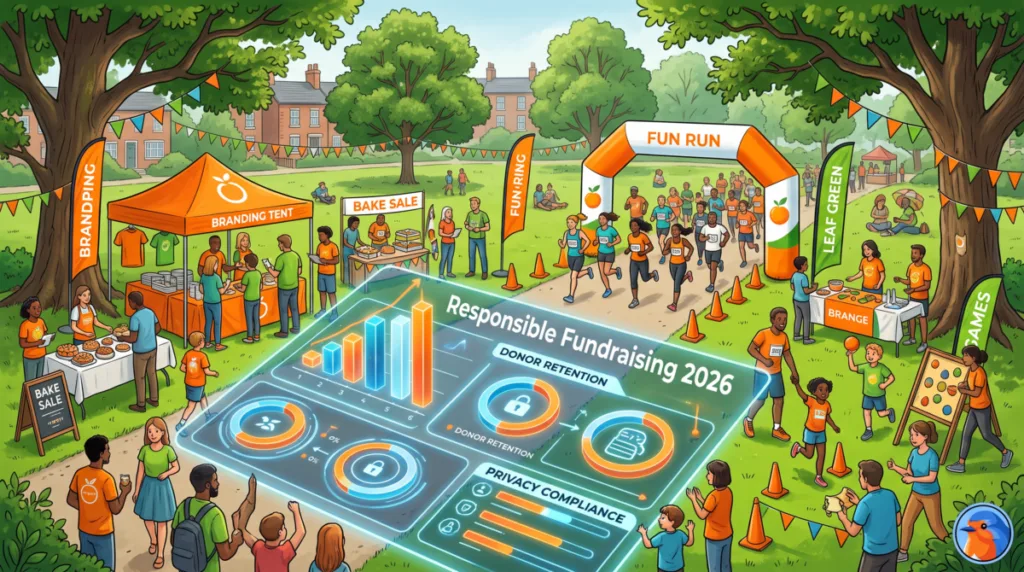
During my years coordinating responses in the field across international development programmes, I learned that technology only works when it solves the immediate human problem in front of you. Writing this on October 22, 2026, UK charity leaders face a distinct tension. You need to increase donor revenue to meet growing community needs. At the same time, according to a 2026 Emulent report cited by Funraise, first-time donor retention is hovering near 14% across the sector.
Nonprofits are losing donors almost as quickly as they acquire them. The solution is not blindly adopting automation or buying third-party data lists. The answer is Ethical Velocity: moving fast with AI-driven personalization while maintaining strict adherence to new UK privacy standards. Balancing regulatory compliance with technological advancement builds long-term donor trust and sustainable growth.
TL;DR: UK charity leaders can achieve “Ethical Velocity” in 2026 by leveraging the new Data Act’s soft opt-in rules to contact supporters flexibly, provided mandatory complaint systems are established. By combining ethical AI segmentation on first-party data with human-in-the-loop workflows, charities can rebuild owned donor journeys and reverse sector-wide retention challenges.
1. Navigating the 2026 Data (Use and Access) Act and the “Soft Opt-In”
The regulatory environment for UK charities has shifted. While some fundraisers view compliance as a barrier, the latest updates actually provide structured freedoms for organizations that handle data responsibly. The Data (Use and Access) Act 2025 introduced a charitable soft opt-in for electronic marketing that came into force on 5 February 2026, according to Plinth.
Clarifying the Nuance: Consent-Based vs. Soft Opt-In Marketing
For years, charities operated under strict consent-only models for digital outreach. You could only email a donor if they actively checked an opt-in box. The soft opt-in provides a new avenue. The Information Commissioner’s Office confirms charities can send direct marketing by electronic mail to people who have expressed an interest in an organisation’s charitable purpose without needing prior consent, providing strict requirements are met, as detailed by the ICO.
This means if a supporter registers for a local run or donates to a specific appeal, you can continue communicating with them about related initiatives. The requirement is that you provide a clear, simple way to opt out at the point of data collection and in every subsequent message. This is not permission to spam. It is an opportunity to cultivate genuine interest responsibly.
Implementing Mandatory 2026 Data Complaint Handling Processes
With new communication flexibility comes mandated accountability. From 19 June 2026, all data controllers must have a process for receiving and responding to data protection complaints, according to Farrer & Co.
Implementing this requirement involves three practical steps. First, appoint a designated team member to monitor a dedicated privacy inbox. Second, update your external privacy policy to explain exactly how supporters can raise a concern. Third, track resolution timelines. Charities must build formal protocols to acknowledge complaints within 30 days and resolve them transparently.
2. Mastering Ethical AI-Driven Segmentation for UK Charities
The ability to contact supporters through the soft opt-in is only useful if the messages resonate. Treating your entire database as a single audience leads directly to the high churn rates plaguing the sector. AI now enables charities to move beyond basic demographics.
From Basic Demographics to Predictive Behavioral Modeling
In the past, segmenting meant grouping people by postcode or donation size. Today, relationship intelligence tools evaluate the timing and channel of previous interactions to forecast future engagement. Research in predictive modeling shows that Recurrent Neural Networks can analyze a supporter’s last five digital actions to predict their next donation amount with high accuracy, according to GardenOfLove.
These systems identify when a supporter is most likely to open an email or which specific program update will compel them to upgrade to a recurring gift. The technology maps the optimal next action for each individual.
Mitigating Privacy Risks to Protect Donor Trust
Utilizing predictive analytics requires a strict ethical framework. You must rely exclusively on information the donor has willingly shared with your organization. Buying scraped external data to feed an AI model breaks trust and violates the spirit of UK data protection laws.
Ethical AI uses internal CRM records, email engagement rates, and owned website analytics. When you build resilience into your charity fundraising strategy, you prioritize transparent data governance. Instead of crossing boundaries, ethical predictive models focus strictly on first-party data captured through owned channels.
3. Rebuilding the Donor Journey After Meta’s In-App Pivot
The digital channels charities rely on are shifting. Organizations that built their acquisition models entirely on third-party social media platforms now face significant challenges.
Overcoming Traffic and Revenue Losses from Social Fundraising
UK charities must now primarily use Instagram for engagement rather than direct donations, following Meta’s removal of in-app fundraising tools in the UK and EEA in July 2024, according to Whitehat. This pivot erased a frictionless giving channel for thousands of nonprofits.
To recover, charities are redirecting social media attention back to platforms they control. This transition forces teams to evaluate long-term giving trends and fundraising resilience. You must optimize your internal donation pages for mobile devices, ensure rapid load times, and offer digital wallets like Apple Pay to replace the convenience lost from social platforms.
Shifting to Owned Digital Fundraising Channels
Owning the journey requires accurate measurement. Charities should implement Google Analytics User ID tracking to assign a unique identifier to each supporter and track individuals across different devices, per Zeffy.
Connecting a robust analytics setup to your CRM allows you to see the complete path from a social media click to an email signup to a finalized donation. By retaining control of the data pipeline, you insulate your charity from unexpected changes by tech conglomerates.
4. Achieving “Ethical Velocity” in Grant and Fundraising Workflows
The principles of ethical data use extend beyond individual giving into institutional fundraising and grant management. Lean teams are under pressure to submit more proposals, but rushing applications using generic generative AI creates factual risks.
The Role of Grounded AI and Reusable Organisation Knowledge
FundRobin approaches this challenge through Grounded AI. Rather than allowing a language model to invent answers based on the open internet, the platform uses an Organisation Brain. This system turns reviewed organizational knowledge into reusable factual context.
When a grant writer needs evidence for a proposal, the system pulls exclusively from authorized source documents. It retains the provenance and currentness of the information. This means historical or conflicting facts remain visible for review, ensuring accuracy takes priority over mere speed.
Human-in-the-Loop AI: Balancing Speed with Factual Authority
Responsible AI does not replace fundraisers. It accelerates their administrative capacity. Case-study teams using grounded AI drafting reported spending about 60% of their saved drafting time on evidence gathering, funder-question mapping and final review rather than generating text (September 2026 data).
FundRobin’s pipeline workflow explicitly requires users to review knowledge and make final submission decisions. This approach keeps human expertise central to the process, ensuring the technology supports relationships rather than replacing them.

FundRobin in Action: Playbooks for Lean Fundraising Teams
Small charities benefit most from safe automation. In FundRobin’s August 2026 analysis of 225 active organisation profiles with staff-size data, 53% were in the ‘Under 10’ staff band.
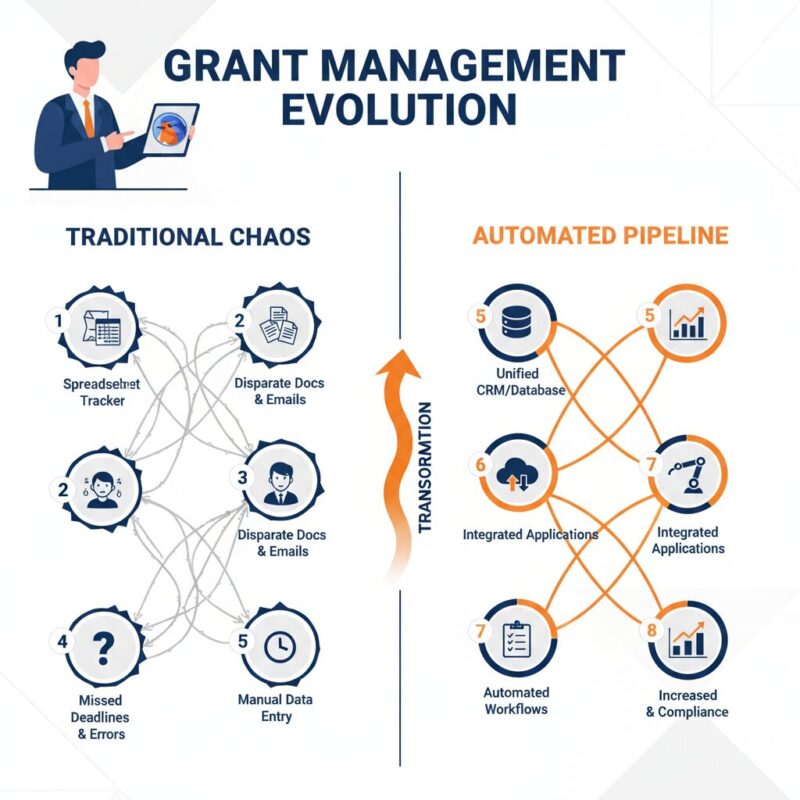
One fractional grant consultant serving five small UK charity clients replaced five separate spreadsheets with customized playbooks. By utilizing Smart Matching against each client’s specific profile, the consultant increased capacity from 14 to 22 applications a quarter and reduced new client onboarding from two weeks to four days. As the consultant noted, they now run five charity pipelines from one screen, using reviewed organizational knowledge to maintain high standards for every submission.
5. Building an Actionable Responsible AI & Privacy Framework
Bridging the gap between technological possibility and data protection requires a structured approach. Without an internal framework, your operations will remain reactive.
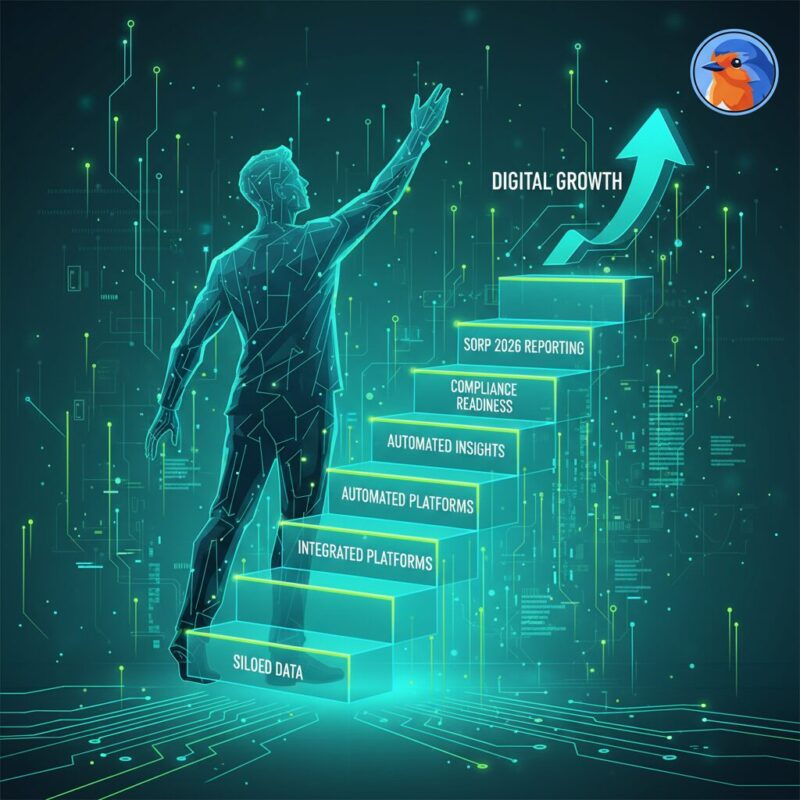
Step-by-Step AI-Readiness Checklist for Small-to-Mid-Sized Charities
Organizations do not need enterprise budgets to prepare for ethical AI. Begin with these steps:
- Audit existing data silos to locate where supporter information currently lives.
- Consolidate reviewed organizational facts into a central, governed library.
- Establish guidelines defining what constitutes a verified source of truth.
- Update privacy notices to explicitly detail how donor data informs communications.
- Select technology vendors that transparently maintain source provenance and human review workflows.
Bridging the Gap Between DPOs and Fundraising Directors
Data Protection Officers focus on risk mitigation, while Fundraising Directors focus on revenue growth. These goals often clash. The solution is creating shared KPIs centered on donor trust.
When both departments measure success by the reduction in opt-out rates and the increase in long-term retention, collaboration improves. Aligning on a shared UK charity fundraising strategy ensures compliance becomes a tool for better stewardship, not an obstacle to outreach.
Frequently Asked Questions
How to use AI for donor segmentation in the UK charity sector 2026?
Charities can use AI for donor segmentation by safely analyzing first-party engagement data to create predictive behavioral models, ensuring all processes comply with the 2026 Data Act. By feeding CRM data into relationship intelligence platforms, organizations predict optimal engagement times and preferred channels. You must avoid third-party data scraping, rely on clearly communicated privacy policies, and use the insights strictly to tailor communications that provide value to the supporter.
What are the ethical guidelines for AI in UK fundraising?
The ethical guidelines for AI in UK fundraising center on maintaining human-in-the-loop oversight, grounding AI tools in verified organizational truth, and ensuring total transparency regarding donor data usage. No automated system should independently finalize a grant submission or alter a donor’s communication preferences without review. Demonstrating the sustainability of this ethical approach, 21 of 24 case-study organizations remained active FundRobin users two or more quarters after onboarding (September 2026).
How does the Data (Use and Access) Act 2025 affect charity marketing?
The Act affects charity marketing by introducing a soft opt-in that allows charities to contact existing supporters without explicit prior consent, provided they implement mandatory, transparent complaint handling mechanisms. This allows fundraisers to email individuals who previously donated or registered for events about similar initiatives. However, charities must offer a clear opt-out in every message and adhere to the strict June 2026 requirement to acknowledge any data protection complaints within 30 days.
What are the best practices for donor journey mapping in 2026?
The best practices for 2026 include prioritizing owned digital touchpoints over third-party platforms, leveraging first-party Google Analytics data for personalized communication flows, and embedding privacy disclosures at every step. Because Meta removed in-app fundraising tools, charities must map journeys that move supporters from social awareness directly to mobile-optimized, internal donation pages. Track interactions across email and web to trigger relevant, timely stewardship messages based on the donor’s exact behavior.
Key Takeaways:
- The 2026 Data Act’s soft opt-in provides new communication flexibilities, but strictly requires transparent, mandatory complaint handling processes.
- Transitioning away from Meta’s in-app fundraising tools necessitates a renewed focus on owned digital channels and first-party data.
- Achieving Ethical Velocity means balancing advanced AI productivity with human-in-the-loop review to preserve donor trust and factual accuracy.
- Lean teams can leverage grounded AI and reusable playbooks to dramatically increase capacity, provided the AI operates on reviewed organizational context rather than generic internet data.
Sustainable fundraising relies on trust. By combining ethical data practices with grounded technology, you respect your supporters’ privacy while securing the resources necessary to advance your mission.