
In October 2026, as compliance requirements continue to tighten, nonprofits face mounting pressure to professionalize their pipeline operations. Relying on passive spreadsheets to track funding opportunities causes disjointed teams and missed revenue. Building a true nonprofit grant system architecture means transforming simple task lists into a strategic revenue engine. A functional system addresses coordination problems—unclear ownership, missing inputs, and delayed approvals—long before the final deadline arrives.
TL;DR: US nonprofits must build comprehensive grant deadline systems that move beyond spreadsheets to prevent staff burnout. Unifying pre-award workflows with post-award reporting into a single pipeline reduces administrative overhead, clarifies internal ownership, and turns reactive grant-seeking into a proactive, structured operation.
The Grant Lifecycle Ecosystem: From Identification to Renewal
How to Build a Strategic Nonprofit Grant Pipeline
A modern grant ecosystem tracks the full journey from initial discovery to post-award renewal. Instead of reacting to looming dates, high-performing development teams adopt a structured methodology: Find, Know, Draft, Manage. This approach connects your organization’s historical evidence directly to the active application, ensuring that deadlines trigger coordinated internal actions rather than a sudden panic for documents.
Diagnosing “Scramble Culture” and Reactive Grant-Seeking

Reactive grant-seeking leads directly to scramble culture. Symptoms include rushed narratives, missing attachments, and disjointed communication between program staff and the grant writer. This reactivity degrades proposal quality and damages funder relationships when submissions barely meet the cutoff. For example, foundation grants typically require 15-20 hours to develop, while federal grants can take 80-200 hours to complete, according to Hiline. When you multiply those hours across a disconnected team, the strain becomes unsustainable.
Why Spreadsheets Fail at Scale
Spreadsheets track static dates. They do not track context, attachment versions, or internal dependencies. They fail to notify users when a budget approval is blocking a narrative draft. This chaotic approach is common, with 79% of organizations reporting the use of five or more systems to manage fundraising and operations, according to CharityEngine. Internal FundRobin research highlights the cost of this fragmentation. One case study of a UK animal welfare charity revealed that before consolidating tools, the six-person team missed three deadlines in a single year due to scattered communication.
The 6-Stage Pipeline Template
A structured pipeline provides immediate relief. Start by adopting this 6-stage template:
- Discovery: Search and filter opportunities based on explicit fit.
- Smart Matching: Prioritize alignment using organizational context.
- Drafting: Use approved historical knowledge to accelerate writing.
- Submission: Implement internal review loops and approvals.
- Post-Award: Track obligations and draw-down reports.
- Renewal: Maintain the funder relationship for the next cycle.
To feed the top of this pipeline with targeted opportunities, consult our Regional Grant Funding Guide 2026.
How to Manage Rolling Grant Deadlines vs Annual Cycles
To effectively manage rolling grant deadlines alongside annual cycles, nonprofits must use anchor dates for fixed submissions and slot rolling applications into the deliberate downtime between them. Annual grants impose rigid, high-pressure deadlines that require intense cross-departmental coordination. Rolling grants accept submissions continuously, offering flexibility but frequently falling off the radar entirely when a team lacks a structured system.
The Strategic Differences in Effort and Timing
Annual cycles demand heavy data gathering and immediate alignment across your entire organization. Research from Peak Grantmaking shows that annual, project-based grants create work on both sides, as nonprofits repackage similar proposals year after year. Conversely, unlike traditional grants with fixed deadlines, rolling deadline grants accept applications year-round until funds are exhausted, according to GrantWatch. Because rolling grants often allow the use of standardized, pre-approved organizational knowledge, they require less immediate custom drafting.
Structuring Your Calendar for Unpredictable Rolling Windows

Map your fixed, annual megagrants first. Treat these dates as unmovable anchor points. Once these are plotted, identify the 4-6 week quiet periods post-submission. Assign internal deadlines for your rolling applications within these windows. If you do not create strict internal deadlines for rolling grants, the urgency of annual applications will indefinitely delay them.
Transitioning from Grant-Dependent to Diversified Revenue
Managing both deadline types effectively creates a stable financial foundation. A balanced calendar prevents severe revenue gaps. Securing smaller rolling grants reduces the existential pressure of winning a single, massive annual award, keeping operations smooth even if an expected renewal falls through. Explore sustainable funding strategies to move beyond single-grant dependency.
Building a Centralized Deadline System: Single Source of Truth
Moving from scattered tools to a unified workspace establishes a single source of truth. One of the most common issues nonprofits face is scattered information, which includes keeping grant deadlines in spreadsheets, documents buried in folders, and communication spread across emails and chats, according to ANAFP. Centralizing tasks, evidence, and drafts in one place directly solves this coordination problem.
Mapping the Internal Workflow Handoff
A clear grant proposal internal workflow handoff eliminates bottlenecks. Define specific owners for every stage. The Program Director owns the impact metrics, Finance controls the budget, and the Grant Writer manages the narrative. Establish formal internal service-level agreements for review timelines to prevent last-minute drafting panics.
Integrating Pre-Award Discovery with Post-Award Compliance
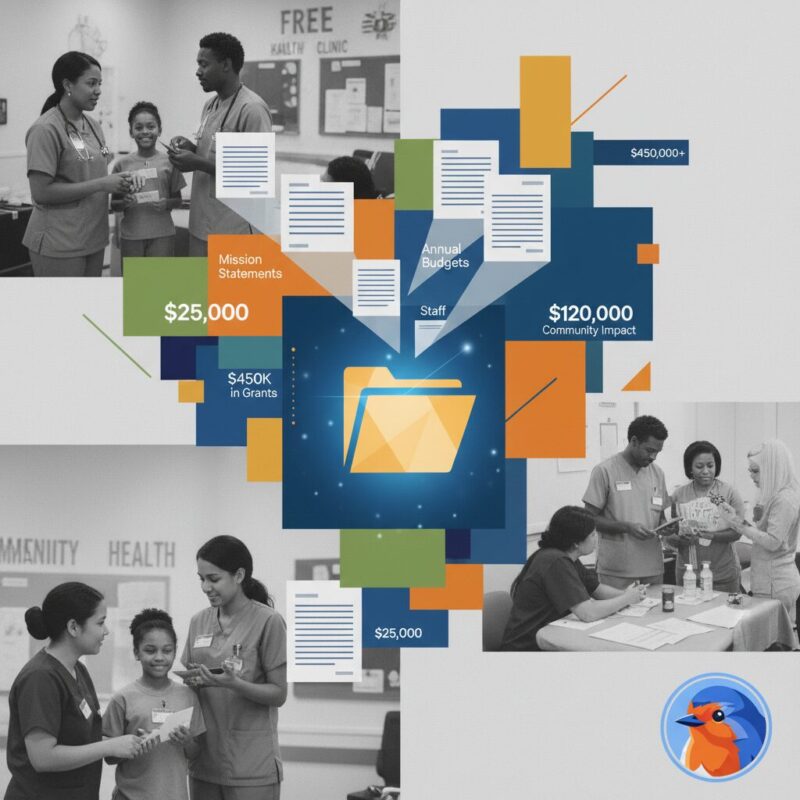
Pre-award and post-award processes are frequently disconnected. Teams secure the funding but lose track of what they actually promised. Keeping evidence, obligations, and the original proposals in a unified Organisation Brain drastically cuts compliance time. In a recent FundRobin case-study program, teams that tracked award obligations and reporting dates alongside the original proposal spent 3.5 hours less per reporting cycle compared to teams using separate documents. Learn more in our Grant Management Audit Compliance Guide.
Designing for US Federal Grants: Complex Deadlines and Reporting
Federal compliance demands absolute precision. Federal grants require distinct systems for SAM.gov renewals, multi-phase technical submissions, and strict draw-down reports. Most federal grants operate on a reimbursement basis where your organization spends the money first and then submits a request for reimbursement, according to Instrumentl. Keeping application and financial tracking in one pipeline is vital. For specific federal compliance strategies, read the US Federal Grants 2026 Nonprofit Playbook.
Sustainability Architecture: Preventing Grant-Writing Burnout
Better systems do more than ensure compliance; they actively protect staff capacity. Burnout is the direct consequence of chronic scramble culture. Replacing frantic email chains with predictable architecture rescues your team from constant stress and reduces high turnover rates.
Identifying the Symptoms of Chronic Grant-Writing Fatigue
Watch for the warning signs. If your grant writer is frequently working weekends to hit submission dates or writing boilerplate text from scratch for every application, the system is failing them. The financial cost of replacing a knowledgeable grant professional far exceeds the investment required to build a centralized pipeline. To address systemic exhaustion, review our solutions for the burnout-funding loop.
Financial Modeling for Reimbursement Gaps
A comprehensive deadline system tracks expected cash flow, not just submission dates. Because federal grants often operate on 30-90 day reimbursement cycles, nonprofits must prepare financial models to cover operations during the gap between award notification and actual cash receipt.
Using Grounded AI and a Reusable Knowledge Library
Implementing grounded AI speeds up the drafting process without sacrificing factual accuracy. By turning past reviewed proposals into a reusable Organisation Brain, teams establish a library of authorized facts. A contextual assistant like Robin can draft narratives based strictly on this authorized organizational knowledge. This preserves a human-in-the-loop workflow: AI proposes the initial draft, while humans refine, verify, and approve the final text.
The Human Element: Proactive Funder Stewardship
Automating your deadline tracking frees up administrative hours. Grant managers can redirect this time to calling program officers and cultivating meaningful relationships. Your pipeline should schedule proactive stewardship touches—like informal project updates and thank-you calls—ensuring you build partnerships rather than simply submitting paperwork.
Frequently Asked Questions
What is the grant lifecycle?
The grant lifecycle is the complete 6-stage process covering opportunity discovery, prioritization, drafting, submission, post-award compliance tracking, and renewal stewardship. Instead of just writing a proposal, effective lifecycle management treats the grant as an ongoing project that connects pre-award research directly to post-award reporting.
How to manage rolling grant deadlines vs annual cycles?
Manage rolling grants by scheduling their internal deadlines during the 4-6 week quiet periods following your rigid annual submissions. Annual cycles dictate your unmovable anchor dates; prioritizing flexible rolling grants during the downtime ensures a consistent application pace and stabilizes revenue without overburdening staff.
How to build a nonprofit grant calendar system?
Build a nonprofit grant calendar by moving off isolated spreadsheets and centralizing your pipeline so that tasks, owners, financial inputs, and deadlines share one unified workspace. Assign specific team members to each step of the internal handoff, ensuring that draft approvals and budget checks happen well before the external submission date.
What are the best practices for nonprofit grant tracking?
The best practice for nonprofit grant tracking is to unify your pre-award and post-award lifecycles so that initial proposals, match signals, and reporting evidence live in a single shared system. This integration eliminates the scramble during audit season, as all promised deliverables remain attached to the original award documentation.
How to prevent grant writing burnout?
Prevent grant writing burnout by proactive capacity planning, standardizing your internal workflow handoffs, and relying on a centralized Organisation Brain of reusable narrative templates. When writers stop starting from a blank page and stop chasing colleagues for last-minute approvals, they can reclaim their time and focus on high-quality stewardship.
Key Takeaways:
- Treat deadlines as a coordination workflow spanning from initial discovery to final audit compliance, moving beyond simple calendar dates.
- Integrate pre-award proposals with post-award evidence; doing so can save hours of administrative overhead per reporting cycle.
- Separate capacity planning for unpredictable rolling cycles from resource-heavy annual submissions to balance the load and avoid burnout.
- Transition from scattered spreadsheets to a centralized, shared pipeline to drop missed internal deadlines to near zero.
Moving away from a fragmented, spreadsheet-driven approach requires a commitment to new processes, but the return on investment is immediate. A unified nonprofit grant system architecture stops the scramble, protects your team from burnout, and ensures you retain institutional knowledge. By taking control of your deadlines, you turn the chaotic task of grant management into a predictable, scalable revenue engine for your organization.
